
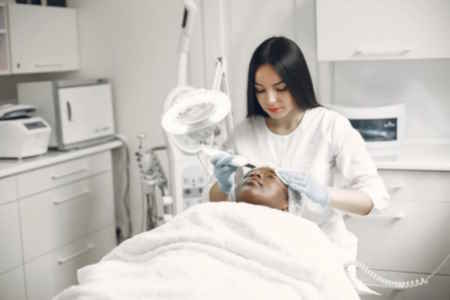
Laser Mole Removal for Safe, Scar-Free Results
Laser treatments are one option used to address some benign moles and age spots. They are valued for their precision and ability to focus on targeted pigment. Outcomes vary from person to person, and no cosmetic procedure is completely without risk. A consultation is required to assess suitability, discuss alternatives, and provide personalised advice.
How Laser Mole Removal Works
Laser devices deliver concentrated light to a defined area of skin. When addressing selected moles or age spots, a specific wavelength is directed at the surface. The energy is absorbed by pigmented cells, which can fragment over time while surrounding tissue is intended to be preserved.
This process is sometimes described as selective photothermolysis. The treated pigment breaks into smaller particles that the body gradually clears. For flat lesions or superficial sun spots, laser technology may be considered because it targets the affected area only. Lesions that are raised, changing, or suspicious require medical assessment. If cancer cannot be excluded, surgical excision and pathology are usually recommended rather than laser treatment.
Benefits of Laser Mole and Spot Removal
The potential benefits include precise targeting of pigment and the ability to treat defined areas. Lasers are designed to focus on pigmented cells while aiming to minimise impact on nearby skin. This may reduce the likelihood of noticeable marks compared with some other methods, although marks can still occur.
Many people resume usual activities shortly after a session. Temporary redness, swelling or crusting can occur. Compared to surgical removal, laser options may involve different recovery experiences. Your practitioner will discuss whether laser, excision, freezing or another approach is more appropriate for your presentation.
For those prioritising a discreet cosmetic outcome, careful case selection and aftercare are important. Results depend on lesion type, location and skin characteristics.
Addressing Patient Questions
Comfort during treatment varies. People often describe a brief snapping or tingling feeling. A topical anaesthetic may be used to improve comfort when suitable.
Session numbers differ based on size, colour and depth. Small or lightly pigmented spots may require one or two sessions. Deeper or larger lesions can need several sessions, or another method may be advised. Your practitioner will develop a plan that considers your skin, medical history and goals.
Visible changes usually appear progressively as the area settles. Temporary redness, swelling or darkening before fading is common. Individual outcomes cannot be guaranteed.
Who is an Ideal Candidate for Laser Removal?
Laser mole removal may suit flat or lightly raised benign lesions and superficial age spots. It is often considered for changes related to sun exposure or ageing when a clinician has assessed the lesion as benign.
Not all lesions are suitable for laser. Moles with irregular borders, rapid growth, colour variation, itching, bleeding, or any other warning signs should be examined by a doctor. In these cases, surgical excision is commonly recommended so that the tissue can be sent for pathology.
A consultation with a suitably qualified practitioner is essential. Suitability depends on lesion diagnosis, skin tone, location, medications, personal history of scarring or pigment change, and your expectations. Treatment plans are individualised.
What to Expect During the Procedure
Before treatment, the area is cleansed and comfort measures may be applied where appropriate. Protective eyewear is used for patient and practitioner safety.
During the session, pulses of light energy are delivered to the lesion while the device parameters are adjusted for your skin. Most sessions take between 15 and 30 minutes, depending on the number and size of areas treated.
After the session, the site may look pink, swollen or slightly darker before it settles. Sun protection and gentle skin care are important. Your practitioner will advise when to resume usual products and activities.
Aftercare and Recovery
Following instructions supports healing and helps reduce complications. Common recommendations include:
- Applying a soothing ointment or moisturiser as directed to maintain hydration and barrier support.
- Avoiding direct sun exposure and using broad-spectrum SPF 30 or higher while the skin recovers.
- Avoiding makeup, exfoliants, active ingredients or other potential irritants until advised.
The area may temporarily darken or form a light crust before fading over several weeks. Some lesions can recur and may require further treatment or a different approach.
Timeframes for improvement vary. Your clinician will discuss expected changes and review your progress.
Why Consider Laser Treatments for Mole and Age Spot Concerns?
Laser treatments can be appropriate for selected benign lesions because they target pigment with precision. They are non-surgical and can be suitable for visible areas such as the face, neck or hands when clinically indicated.
Another potential benefit is a relatively straightforward recovery compared with some surgical approaches. Redness or mild swelling is common and typically short lived. Your practitioner will explain alternatives, likely session numbers, costs, and follow up requirements so you can make an informed decision based on balanced information.
Learn more about different removal methods and discuss which option may be suitable during a consultation.
Important Information
Images on this page are for general illustration and do not predict outcomes. Results vary between individuals. This information is general in nature and does not replace a consultation with a suitably qualified health professional.
Risks and Recovery
All procedures carry risks. Your practitioner will discuss the likelihood and management of potential adverse effects before treatment. Possible risks include:
- Changes in skin colour such as temporary or persistent darkening or lightening.
- Redness, swelling, crusting, blistering or superficial burns.
- Scarring, textural change or prolonged sensitivity.
- Infection requiring medical treatment.
- Incomplete clearance, recurrence of the lesion, or the need for additional sessions.
- Unsuitable lesion diagnosis, which may require surgical excision and pathology instead of laser.
Recovery experiences differ. Many people return to usual activities soon after treatment. Sun protection, gentle skin care and follow up appointments are important for best outcomes. If you experience unexpected pain, increasing redness, discharge, or other concerns, contact the clinic promptly.
“