
We’ve all experienced that unsatisfying meal where, even after finishing everything on your plate, you find yourself looking for more food soon after. If you’ve wondered what keeps hunger away for longer, the answer may lie in understanding the glycemic index (GI).
Super Carbs
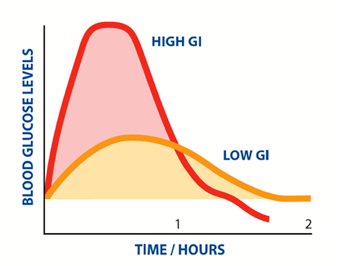
Carbohydrates have developed an undeserved bad reputation, but not all carbs are the same. The glycemic index ranks carbohydrates from 1 to 100, showing how they affect your blood sugar levels. Carbs in rolled oats, for instance, are digested slowly, causing a steady rise and fall in blood glucose—these are low GI foods. High GI foods, on the other hand, are broken down quickly, causing your blood sugar to spike and then drop rapidly, much like a rollercoaster ride.
This rapid increase in blood sugar makes your body release more insulin, which over time may increase the risk of developing type 2 diabetes. High GI foods can also lead to energy crashes and strong cravings for sugary snacks, creating an unhealthy cycle.
This graph shows the impact of the glycemic index on blood glucose levels
Meaning of ‘glycemic load’
While GI measures the quality of carbohydrates, glycemic load (GL) considers both quality and quantity. This means that eating a large portion of low GI food can still make your body work hard to process it. The key is moderation—enjoy smaller portions of low GI carbohydrates for balanced energy.
Let’s talk about Whole Grains
The GI is important, but it’s not the only thing to consider. Whole grains such as brown rice, oats and grainy breads are far more nutritious than refined carbohydrates. Whole grains contain all three parts of the grain, which means they are high in fibre, healthy fats and antioxidants. They also help lower the risk of heart disease, certain cancers and may even support longevity.
Top 5 Reasons to Choose Low GI
- Feel Full for Longer
Low GI foods are digested slowly, helping you feel satisfied for longer and less likely to overeat.
- Heart Healthy
Many low GI foods are rich in fibre, which helps reduce total and LDL (‘bad’) cholesterol, lowering your risk of heart disease and stroke.
- Long-Lasting Energy
Unlike high GI foods that cause quick energy spikes and crashes, low GI foods provide steady energy throughout the day.
- Manage Blood Sugar Levels
For people with diabetes, low GI foods can help maintain more stable blood glucose levels and reduce the risk of long-term complications.
- Support a Healthy Weight
When combined with protein-rich foods, a low GI diet can help regulate insulin levels and promote fat metabolism, supporting healthy weight management.
A Sample Low-GI Menu for 1 Week
This sample menu offers an example of what a week on a low GI plan could look like. You can adapt it to your personal taste and lifestyle.
Monday
- Breakfast: Rolled oats porridge with milk and chopped fruit
- Lunch: Chicken and salad sandwich on whole grain bread
- Dinner: Beef stir-fry with vegetables and long-grain rice
Tuesday
- Breakfast: Whole grain toast with avocado, tomato and smoked salmon
- Lunch: Minestrone soup with whole grain bread
- Dinner: Grilled fish with steamed broccoli and beans
Wednesday
- Breakfast: Omelette with mushrooms, spinach and cheese
- Lunch: Salmon and quinoa salad
- Dinner: Homemade pizzas with whole wheat Lebanese bread
Thursday
- Breakfast: Smoothie with berries, milk, Greek yoghurt and cinnamon
- Lunch: Chicken pasta salad made with whole wheat pasta
- Dinner: Homemade burgers with vegetables on whole grain rolls
Friday
- Breakfast: Porridge with apple and cinnamon
- Lunch: Toasted tuna salad sandwich on whole grain bread
- Dinner: Chicken and chickpea curry with basmati rice
Saturday
- Breakfast: Eggs with smoked salmon and tomato on whole grain toast
- Lunch: Egg and lettuce wrap made with whole grain bread
- Dinner: Grilled lamb chops with vegetables and mashed pumpkin
Sunday
- Breakfast: Buckwheat pancakes with berries
- Lunch: Brown rice and tuna salad
- Dinner: Beef meatballs with vegetables and brown rice