
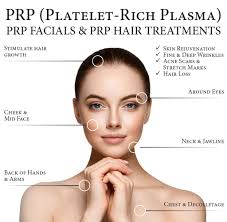
PRP therapy refers to platelet-rich plasma therapy. Platelet-rich plasma is an autologous product (derived from the person’s own blood) that contains a higher concentration of platelets in a small amount of plasma. PRP is being explored for its potential benefits in supporting hair growth and assisting tissue healing.
HOW DOES IT WORK – MODE OF ACTION?
PRP contains platelets, a type of blood cell derived from the person’s own body. These platelets contain proteins and clotting factors that play a role in wound healing. The proteins in PRP interact with receptors in affected cells, which can trigger angiogenesis, mitogenesis and macrophage activation.
A small amount of blood is drawn and centrifuged to separate the platelets from other components. The platelet-rich portion is then applied to the treatment area. At the tissue level, PRP helps release growth factors and initiates a natural healing response. This process may support tissue repair, regeneration and recovery.
IS IT SAFE?
PRP uses the person’s own blood, which reduces the likelihood of allergic reactions. However, as with any medical procedure, there are potential risks. You should discuss your suitability with a qualified health practitioner and mention any medications, including anti-inflammatory drugs, before undergoing PRP treatment.
WHAT IS THE EVIDENCE?
Research into PRP is ongoing. Some studies have suggested that PRP may assist in the healing of soft tissue and musculoskeletal injuries. Evidence varies between studies, and outcomes can differ from person to person. More high-quality research is needed to confirm its effectiveness for various conditions.
WHAT CAN YOU EXPECT FROM THE TREATMENT?
Your practitioner will first assess whether PRP is suitable for you. You may be advised to avoid anti-inflammatory medicines before your appointment. On the treatment day, a small sample of your blood is collected and processed to obtain PRP. The area is then numbed, and the PRP is applied to the selected site. Your practitioner will provide aftercare instructions and discuss your recovery plan.
WHAT ARE THE COMMON USES OF PRP?
- PRP for scalp applications is being studied for its potential to support hair growth and scalp health.
- PRP for knee and joint conditions is being explored for its potential role in easing discomfort linked to inflammation in musculoskeletal conditions.
- PRP may be used in orthopaedic settings, such as for shoulder pain, knee pain, tendon or ligament injuries and similar conditions.
- PRP may be included as part of facial treatments to support skin texture, fine lines and scarring.
- PRP has also been explored for wound care, including chronic ulcers and minor burns.
RISKS AND RECOVERY
As PRP uses your own blood, serious complications are uncommon. Some people may experience temporary redness, swelling, bruising, or mild discomfort at the application site. Rare risks include infection or inflammation. Recovery time varies depending on the treated area and individual factors. Your practitioner will guide you on aftercare and what to expect following treatment.
To learn more or discuss whether PRP may be suitable for you, book a consultation with Dr Reza at Revita Medical and Skin Clinic.